

Occupational Therapist vs Physiotherapist: Who Handles Home Modifications?

Table of Contents

Many Melbourne residents wonder about the difference between an occupational therapist (OT) and a physiotherapist (physio), especially when planning NDIS home modifications. Both professionals play critical roles in improving safety, mobility, and independence, but their responsibilities differ. Understanding these differences ensures your home modifications are safe, effective, and eligible for NDIS funding.

Residents searching for an occupational therapist in Frankston, occupational therapy in Werribee, or NDIS physiotherapy in Melbourne need clear guidance on who to contact for assessments, advice, and home visits. This guide explains when to involve an OT versus a physiotherapist and how to secure proper NDIS approvals.

OT vs Physio

Understanding the Roles in NDIS Home Modifications in Melbourne

Occupational Therapist (OT): Leading Home Assessments and Modifications

Occupational therapists are essential for full home assessments and NDIS funding reports. They evaluate how your home environment affects daily living, safety, and independence, and they recommend structural modifications tailored to your needs.

For examples of specific adaptations, you can review our guide on the top home modifications supported by the NDIS.

Key OT responsibilities for Melbourne residents:

  • Conduct detailed functional assessments at home.
  • Identify structural changes like ramps, widened doorways, or bathroom renovations.
  • Recommend assistive equipment, including hoists, rails, and adaptive furniture.
  • Prepare formal reports required for NDIS home modification funding.

Daily Living and Independence Support:

  • Adjust kitchen layouts for easier access.
  • Install ramps or stairlifts.
  • Design safe bathroom and bedroom setups.

Physiotherapist (Physio): Supporting Safe Movement and Mobility

Physiotherapists focus on movement safety, balance, and fall prevention within the home. While they do not write formal NDIS modification reports, they provide vital guidance to improve mobility and independence.

For details on the specific conditions physiotherapy can support, see what conditions NDIS physiotherapy in Melbourne can help with.

Key physio responsibilities for Melbourne homes:

  • Conduct home safety checks for movement-related hazards.
  • Recommend exercises to improve mobility and reduce fall risk.
  • Advise on equipment trials such as walkers or gait aids.
  • Train carers in safe transfer techniques.

Minor Modifications and Mobility Support:

  • Non-slip mats and improved lighting.
  • Safe stair navigation exercises.
  • Gait training and strength-building routines.

Key Differences Between an OT and a Physiotherapist in Melbourne

Aspect

Occupational Therapist

Physiotherapist

Role in Home Modifications

Leads full assessments, recommends structural changes, writes NDIS funding reports

Provides advice on minor hazards, movement safety, fall prevention; refers to OT for major changes

Focus

Daily activities, independence, accessibility

Strength, balance, mobility, pain management

NDIS Involvement

Required for major modifications and funding approvals

Supports mobility and safety; refers to OT for complex modifications

Examples

Ramp installation, bathroom renovations, hoists, adaptive equipment

Non-slip mats, grab rails, gait training, exercises for stairs

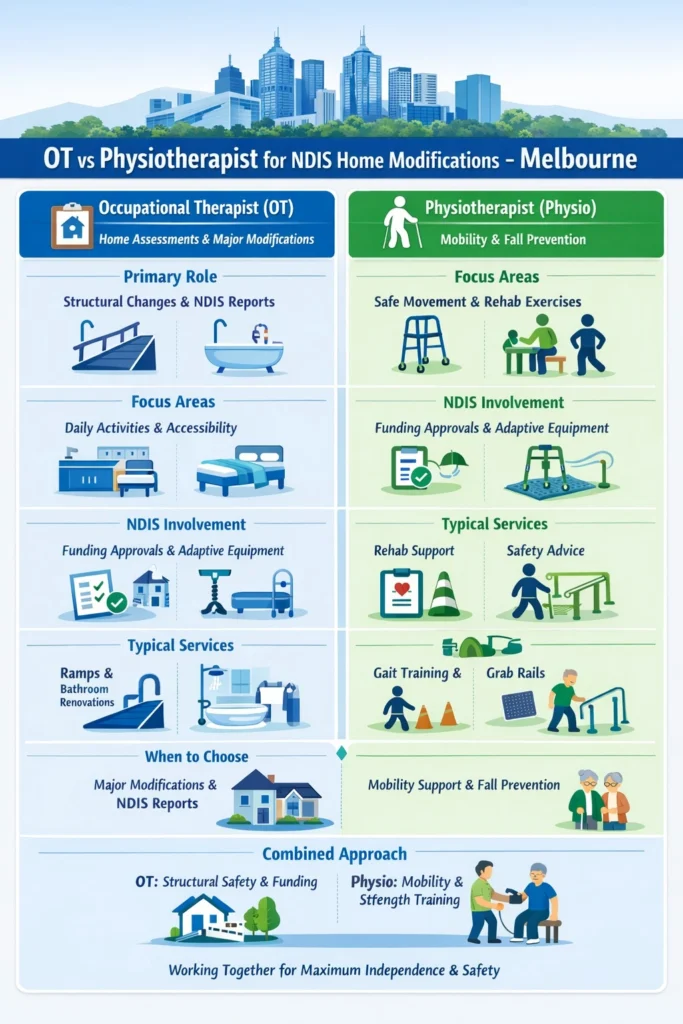
To make it easier to understand the differences at a glance, we’ve created a visual guide comparing occupational therapists vs. physiotherapists in NDIS home modifications. This infographic highlights who handles major modifications and minor safety adjustments and how they work together to improve home safety and independence in Melbourne.

OT vs Physio roles for NDIS home modifications in Melbourne. Learn which professional you need for major or minor home changes. Learn more about the top NDIS-supported home modifications.

Quick Guide for Melbourne Residents:

  • Choose an OT for major home modifications, NDIS funding reports, and equipment that changes home structure.
  • Choose a physiotherapist for mobility support, fall prevention, and minor safety adjustments.Use Both: A combined approach for optimal movement readiness and home accessibility.

The OT Home Modification Process in Melbourne

Understanding OT vs Physio roles also means knowing how OTs manage home modifications (see infographic above for a quick visual comparison of responsibilities). In-home OTs follow a structured process to ensure safety, independence, and NDIS funding eligibility.

Typical OT Process:

  1. Conduct an initial home visit to evaluate accessibility and daily challenges.
  2. Complete a functional assessment focusing on independence, mobility, and safety.
  3. Prepare a formal report required for NDIS home modification approvals.
  4. Collaborate with builders or contractors to implement recommended modifications.

Residents in North Melbourne, Frankston, or Werribee and suburbs across Melbourne can rely on these assessments to secure NDIS funding and ensure their homes support long-term independence.

For further inspiration on modification ideas, check out our guide to NDIS-funded home modifications and ideas.

How Physiotherapists Support Home Safety in Melbourne

Physiotherapists complement OTs by addressing mobility and fall risks. Refer to the infographic above for a quick overview of the tasks that OTs and physios handle.

Physio Support Examples:

  • Home-based fall risk assessments and movement evaluations.
  • Trialing mobility equipment like walkers and gait aids.
  • Exercises to improve strength, balance, and confidence.
  • The OTs are consulted for structural changes such as ramps or bathroom modifications.

Working together, OTs and physiotherapists ensure homes are both safe and accessible for Melbourne NDIS participants.

For broader support in daily living, see how NDIS-funded therapy improves daily living.

Costs, Funding, and NDIS Considerations in Melbourne

Understanding the difference between an OT and physiotherapist helps you plan NDIS-funded services.

Key Points:

  • OT assessments and reports are usually required for major modifications to qualify for NDIS funding.
  • Physiotherapy sessions for mobility support and fall prevention are billable rehabilitation services.
  • Minor safety advice supports mobility, while OTs handle complex structural recommendations.

If you’re exploring transport as part of your NDIS plan, also review who can get NDIS transport funding.

Occupational Therapist vs Physiotherapist

Finding OTs and Physiotherapists in Melbourne

Selecting the right professional is just as important as knowing their roles. NDIS occupational therapists and physiotherapists in Melbourne can provide home visits, conduct assessments, and deliver tailored recommendations.

Tips for choosing a provider:.

  • Search for experience in home modifications and accessibility assessments.
  • Look for providers who adhere to the strict standards and guidelines set by the NDIS.
  • Choose providers offering home visits if mobility is limited.
  • Check reviews or ask for referrals from other NDIS participants.

Check out Roaming Therapy. We offer mobile occupational therapy and mobile physiotherapy across Melbourne. Contact us today!

OT vs Physiotherapist for NDIS Home Modifications in Melbourne

Choosing between an occupational therapist vs. physiotherapist depends on your home modification needs and mobility goals. For a clear visual summary, refer to the infographic above.

  • OTs: Essential for full assessments, structural changes, and NDIS funding reports.
  • Physios: Focus on mobility support, fall prevention, and minor safety adjustments.
  • Both: Provide maximum safety, independence, and accessibility.

By working with experienced providers who understand NDIS home modifications, Melbourne residents can improve home safety, enhance independence, and ensure their NDIS plan supports effective and funded changes.

Frequently Asked Questions

Do I need an occupational therapist (OT) for NDIS home modifications?

Yes, an OT (or a home modification assessor qualified as an OT) is generally required to assess your needs and recommend modifications that meet NDIS funding criteria. Their formal assessment and reports help justify funding for major structural changes.

Physiotherapists don’t usually provide the formal NDIS home modification reports needed for major structural funding, but they assess movement, balance, and fall risk, which supports planning and safety. They often work alongside OTs to ensure movements in your modified home are safe.

Possibly, some participants benefit from both services: OTs for assessing home access and structural change needs and physios for improving mobility, balance, and function inside the home. Many participants use both to achieve better overall outcomes.

Not always. The modification must meet NDIS funding criteria: it needs to relate to your disability, help you reach your goals, and be legal, safe, and cost‑effective. Approval depends on how your OT’s assessment aligns with these criteria.

You can pay for additional modifications yourself (e.g., cosmetic finishes, features unrelated to disability needs), but these are separate from NDIS funding. Your OT still needs to confirm that the changes remain appropriate for your needs.

Yes, but you must obtain written approval from the property owner before the modification can proceed. Public housing providers have the authority to implement reasonable accessibility adjustments without NDIS funding, but the NDIS may still fund specialised, disability-related changes.

How to Get Started With NDIS Physiotherapy in Adelaide

Getting started with NDIS physiotherapy Adelaide begins with submitting an access request supported by medical and functional evidence. Once approved, participants attend a planning meeting to align physiotherapy supports with daily life goals.

Participants already on the NDIS can request a plan review if their physical needs change over time.

When goals are framed around independence, safety, and participation, physiotherapy supports are more likely to be approved and sustained.

For a comprehensive overview, read our Essential Guide for NDIS Physiotherapy for best practices and planning tips.

Share the Post:

Recent Posts​

NDIS Physio for Parkinson’s Disease in Melbourne

Managing Parkinson’s can feel overwhelming, but the right support makes a difference. This guide explains how physio for Parkinson’s disease helps improve mobility, balance, and daily function. Learn how NDIS-funded physiotherapy in Melbourne can support your goals. Click to explore your options today.

Read More

NDIS Home Modifications: Funding, Eligibility & Ideas

Understanding NDIS Home Modifications can help you create a safer, more accessible living space. From funding and eligibility to practical ideas, this guide covers what you need to know. Want to make the most of your NDIS plan? Click to explore your options and get started today.

Read More

Top Home Modifications Supported by the NDIS

Making the right Home Modifications can greatly improve safety, comfort, and independence for NDIS participants. From bathroom upgrades to accessibility changes, this guide highlights the most common supports available. Want to see which modifications may suit your needs? Click to explore the full list and get started today.

Read More
Scroll to Top