
NDIS Overhaul 2026: Key Changes, Cuts & What Happens Next
Big changes are coming to the NDIS in 2026. From new eligibility rules to funding reforms, here’s what the overhaul means and what happens next.
Do you or someone you know have a permanent disability? Do they have access to the support needed to live more independently and improve their quality of life? This is what NDIS aims to do. They provide support to PWDs making their everyday life a bit easier.
But here’s the thing, understanding how NDIS works can feel like learning a new language. This beginner’s guide will help you understand the NDIS funding process. This will also walk you through how to make the most out of your plan.
NDIS is also known as the National Disability Insurance Scheme. This is an Australian government program that helps people with permanent & significant disabilities. It offers funding for services and support to participants. This helps them live as independently as possible.
NDIS allows people with disabilities access to allied therapy services. It includes physiotherapy home visits, mobile occupational therapy, and mobility aids. Participants will receive funding based on their needs. They will be given the necessary resources to enhance their quality of life.
The NDIS operates through the National Disability Insurance Agency (NDIA). The NDIA manages the program and helps coordinate services for eligible participants. This scheme aims to provide people with disabilities control over their services & support.
Who can avail of the NDIS program? To be eligible for NDIS, you must:
Be under 65 years old.
Be an Australian citizen, permanent resident, or hold a special category visa.
Have a permanent and significant disability that affects your daily life.
If you meet these basic criteria, the next step is to go through an assessment process. The NDIA will assess your disability. They will examine how it affects your ability to carry out everyday activities. If you’re eligible, you’ll be assigned an NDIS planner to help create your individualised plan.
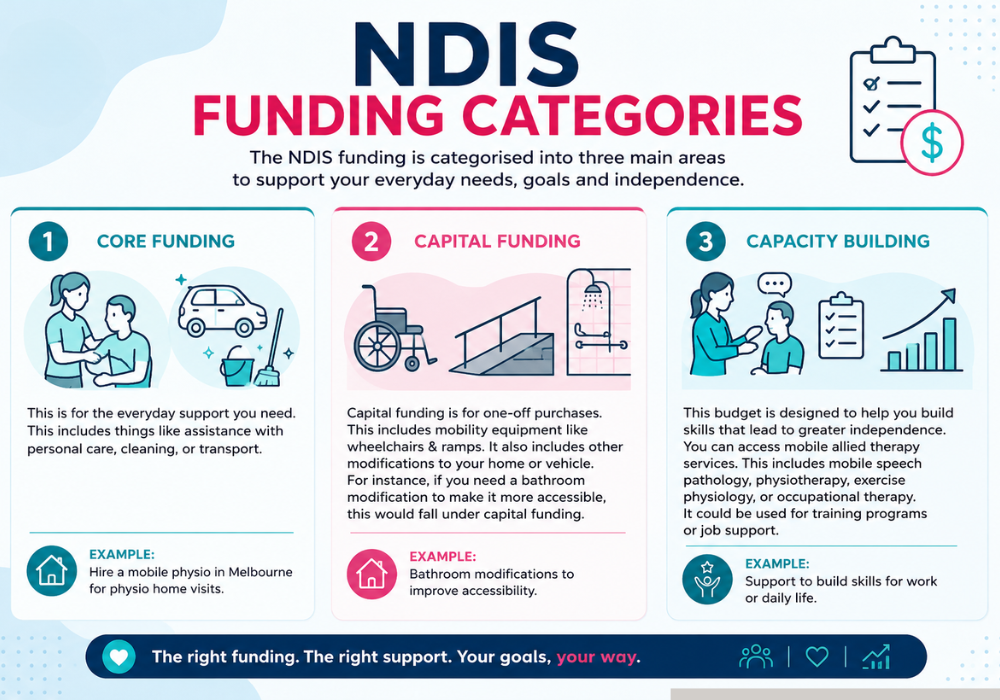
One of the key features of the NDIS is how funding is categorised into three main areas.
This is for the everyday support you need. This includes things like assistance with personal care, cleaning, or transport. Think of it as your go-to budget for everyday activities. You can hire a mobile physio in Melbourne to help with your physio home visits.
Capital funding is for one-off purchases. This includes mobility equipment like wheelchairs & ramps. It also includes other modifications to your home or vehicle. For instance, if you need a bathroom modification to make it more accessible. This would fall under capital funding.
This budget is designed to help you build skills that lead to greater independence. You can access mobile allied therapy services. This includes mobile speech pathology, physiotherapy, exercise physiology, or occupational therapy. It could be used for training programs or job support.
Once your plan is in place, it’s time to manage your funding. Here are the three main options;
You take full control over your fund. You can choose your providers and manage payments directly. It offers you flexibility but needs careful tracking of your expenses.
You can have NDIA manage your funding. This means they will pay your providers directly. It’s a good option if you don’t want to deal with the paperwork yourself. Note that this limits the number of providers you can use.
You can choose a third-party provider to help you manage your funds. They will process the payments to providers on your behalf. This option combines flexibility with support, offering a good middle ground.
It’s crucial to find the right NDIS-approved provider to get the most out of your plan. Research whether you need mobile allied health services or mobility aids.
Here are some nuggets to help you select the best providers:
Check their experience: Find a provider that specialises in your area of need. If you need mobile physiotherapy, look for a provider that provides physio home visits.
Compare providers: Different providers offer different levels of support. Check if they are NDIA-registered and have good reviews from other clients.
Use provider directories: The NDIA has an online directory. You can search for providers in your area. Compare options and choose a service that fits your needs.
There’s a lot of confusion surrounding NDIS. Some common myths can make the process seem even more overwhelming
Myth #1: You need to have a disability from birth to qualify for NDIS.
In reality, the NDIS supports people with disabilities acquired at any stage in life. The disability should be permanent and significantly impact your daily activities.
Myth #2: You can’t change your NDIS plan once it’s approved.
The truth is, that your NDIS plan is reviewed regularly. If your needs change, you can request an NDIS plan review to adjust your funding.
Here are some practical tips to help you maximise your NDIS funding and make the most of your services:
Stay organised: Keep track of your funding, invoices, and the services you’ve used. This will help you stay within your budget and avoid surprises.
Understand your goals: Be clear about your goals when you create your NDIS plan. It might be to improve your mobility with NDIS physiotherapy. Or, getting support to live independently. The more specific you are, the better your plan will align with your needs.
Be proactive: Don’t wait for problems to arise. Reach out to your NDIS planner or provider if you need additional support. They’re there to help you!
The NDIS can be a real head-scratcher at first. But once you get the hang of it, it’s like having a secret weapon to improve your quality of life. Whether you’re accessing NDIS Allied Health services, getting a mobile physio in Melbourne, or exploring new opportunities to live more independently, the NDIS is designed to give you control over your life.
If you need help finding the right services for you, reach out to an NDIS provider or support coordinator. There are plenty of resources available to help you along the way.
Big changes are coming to the NDIS in 2026. From new eligibility rules to funding reforms, here’s what the overhaul means and what happens next.
Choosing between an Occupational Therapist vs Physiotherapist for home modifications can be confusing. Each plays a different role in improving safety, mobility, and daily function at home. This guide explains who does what so you can make the right choice. Click to learn which expert you need.
Managing Parkinson’s can feel overwhelming, but the right support makes a difference. This guide explains how physio for Parkinson’s disease helps improve mobility, balance, and daily function. Learn how NDIS-funded physiotherapy in Melbourne can support your goals. Click to explore your options today.